
Film for Concert Photography: Capturing Live Music in Extreme Low Light
Quick Summary
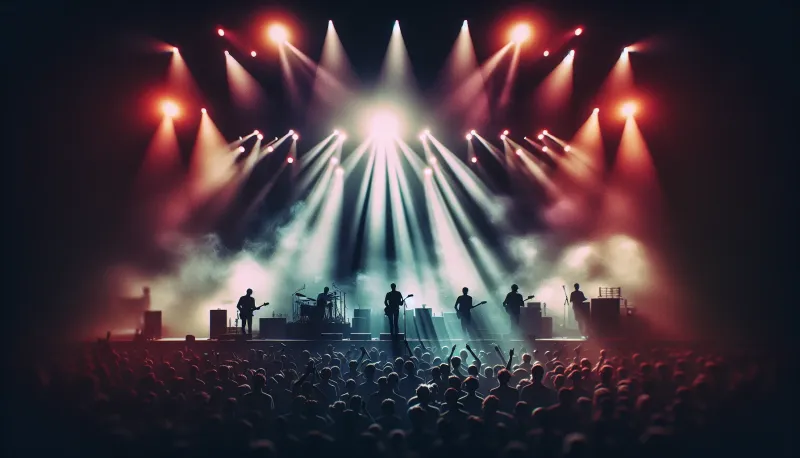
Concert photography on film requires ISO 800-3200 speeds combined with fast lenses (f/1.4 to f/2) and often push processing. We've processed thousands of concert rolls at Kubus Photo Service, and the reality is that grain becomes part of the aesthetic rather than a flaw to fix. Black and white films like HP5+ and Tri-X push beautifully to ISO 1600 or 3200 with distinctive character. For color, CineStill 800T thrives under stage lighting with its halation glow and tungsten balance. Embrace the limitations and let them shape your style.
- Ilford Delta 3200 and T-Max P3200 for extreme low light (true ISO around 1000-1600)
- HP5+ or Tri-X pushed to 1600-3200: cheaper alternative with more contrast and classic look
- CineStill 800T for color under stage lighting with signature halation effect
- Fast lenses essential: 50mm f/1.4 (), 35mm f/1.4 (), 85mm f/1.4 ()
- Spot meter off performers' faces or mid-tones, not stage lights
- Embrace grain as part of the aesthetic—the classic concert photography look came from pushed Tri-X
Concert photography on film is absolutely possible—you'll need ISO 800-3200 film, fast lenses (f/1.4 to f/2), and often push processing, but the grain and texture that result have defined the look of rock photography for 50+ years. Concert photography presents the most demanding conditions film photographers encounter. Stage lighting shifts constantly in color and intensity. Performers move unpredictably. Venue policies restrict flash. The available light barely registers on meters, and what exists comes from wildly varying sources designed for visual spectacle rather than photographic convenience.
Despite these challenges, concert photography and film share a deep history. The grainy, high-contrast images of classic rock documentation were shot on pushed Tri-X because that was what worked. Today, photographers choosing film for concerts tap into that aesthetic tradition while adding unique qualities digital can't replicate.
We've processed thousands of concert rolls at Kubus Photo Service since the 90s, and in our experience, the photographers who succeed embrace the medium's constraints rather than fighting them. This guide covers the practical realities of shooting concerts on film, from film stock selection through processing strategies and the techniques that make it work.
Understanding Concert Lighting
Before discussing film choices, understanding concert lighting helps explain why certain approaches work and others fail. Why is concert photography so much harder than street photography at night?
The Exposure Challenge
Most concert venues operate at light levels far below what cameras consider normal. Where daylight provides EV 15 (ISO 100, f/16, 1/125th), a typical rock club stage might offer EV 4 to EV 6. That's eight to eleven stops less light.
To shoot handheld with motion-stopping shutter speeds (1/125th or faster) at these levels requires some combination of:
-
ISO 1600-3200 film speeds
-
Apertures of f/1.4 to f/2
-
Push processing for additional speed
Some photographers accept motion blur as an aesthetic choice, which opens up slower shutter speeds like 1/30th or 1/60th. This allows slightly slower film or smaller apertures but changes the look significantly.
Color Temperature Chaos
Stage lighting rarely resembles natural light. Concert productions use:
-
LED fixtures in every color imaginable (2700K-10000K+)
-
Traditional tungsten Par cans (warm, around 3200K)
-
Moving heads that can shift color mid-song
-
Haze and fog that catches and diffuses light
-
Blackouts that drop to near-zero light instantly
Color negative film handles this chaos remarkably well. The negative's latitude accommodates mixed color temperatures, and your lab can adjust color balance during scanning. Slide film struggles badly with mixed lighting since what you capture is what you get.
Light Intensity Variation
Unlike studio work where you control the light, concert lighting follows the music. Quiet verses might have minimal illumination. Choruses might explode with full stage wash. Song transitions could mean complete blackouts.
This variation affects metering strategy. A single reading at song start may be wildly wrong by the chorus. Experienced concert photographers learn to read lighting designs and anticipate changes.
Film Stock Selection for Concerts
Concert photography demands speed above almost everything else. Your options fall into several categories.
Ilford Delta 3200 3200 — True Speed: ~1000-1250, Push Limit: 6400-12800, Best For: Extreme low light,
Kodak T-Max P3200 3200 — True Speed: ~1000-1250, Push Limit: 6400-12800, Best For: Extreme low light, finer grain,
Ilford HP5+ (pushed) 400 — True Speed: 400, Push Limit: 1600-3200, Best For: Best value, classic look,
Kodak Tri-X (pushed) 400 — True Speed: 400, Push Limit: 1600-3200, Best For: Most contrast, iconic grain,
CineStill 800T 800 — True Speed: 800, Push Limit: 1600, Best For: Color under stage lights,
Kodak Portra 800 800 — True Speed: 800, Push Limit: 1600, Best For: Natural color,
Dedicated High-Speed Black and White
Ilford Delta 3200: The most widely available high-speed black and white film. Despite the 3200 speed rating, Delta 3200's true sensitivity sits around ISO 1000-1250. The 3200 rating accounts for push processing that Ilford assumes will happen.
Delta 3200 produces moderate grain with T-grain technology that keeps edges relatively clean. The tonal response handles concert lighting well, with enough latitude to survive exposure estimation when metering becomes impossible.
At box speed (rated at 3200, processed accordingly), Delta 3200 produces usable shadow detail with visible but not overwhelming grain. For extremely dark venues, rating at 6400 and pushing further is possible with increased grain and contrast.
Kodak T-Max P3200: Kodak's high-speed offering uses similar technology to Delta 3200 with comparable true sensitivity around ISO 1000-1250. P3200 produces slightly finer grain than Delta 3200 in many developers but has less exposure latitude.
T-Max P3200's tonal response differs from traditional grain films. Highlights compress differently, shadows behave differently. Some photographers prefer its clinical cleanliness; others find it lacks the organic character of conventional grain.
Both Delta 3200 and T-Max P3200 offer the fastest native speeds available in currently produced films. For the absolute darkest venues where you need every photon, these are your primary tools.
Pushed ISO 400 Black and White
Many concert photographers prefer pushing standard ISO 400 films rather than using dedicated high-speed stocks. The reasons include cost (400-speed film is cheaper, about 30% less), availability, and aesthetic preference.
Ilford HP5 Plus pushed to 1600 or 3200: HP5+ pushes beautifully with relatively contained grain increase. At 1600, HP5+ maintains surprising tonal range. At 3200, contrast increases significantly and shadows block up, but the results have a classic concert photography look.
HP5+ at 1600 is perhaps the sweet spot for concert work: enough speed for most venues, reasonable grain, and cost efficiency compared to high-speed stocks. What actually happens when you push HP5+ three stops? Grain increases noticeably, shadows lose detail, but midtones and highlights retain excellent separation.
Kodak Tri-X 400 pushed to 1600 or 3200: Tri-X develops more contrast than HP5+ when pushed, producing a punchier, grittier aesthetic. The classic rock photography look often came from Tri-X pushed to 1600 or beyond, developed in high-energy chemistry.
Tri-X at 3200 produces very high contrast with blocked shadows and grain that becomes a significant visual element. This look works brilliantly for aggressive music where the aesthetic matches the energy.
Push processing requires communicating with your lab. When you send film rated at a non-box speed, clearly mark the roll with the shooting ISO so the lab knows to extend development time. Push processing costs slightly more than standard development (typically extra per roll) due to the additional handling.
Color Options for Concert Photography
CineStill 800T: The obvious choice for color concert photography. CineStill's tungsten balance handles warm stage lighting naturally, and its signature halation creates glowing halos around lights that many consider ideal for the concert environment.
At ISO 800, CineStill provides workable speed for many venues. In darker conditions, pushing to 1600 works adequately, though shadow detail suffers and halation intensifies. See our complete CineStill 800T guide for detailed shooting advice.
The halation effect can become overwhelming with too many point light sources in frame. Compose to place light sources intentionally rather than having halation bleed across your entire image.
Kodak Portra 800: The other high-speed color negative option. Portra 800 lacks CineStill's tungsten balance and halation effect, producing more conventional results. Color shifts happen under non-daylight sources, with tungsten appearing warm and LED colors rendering however they actually are.
Portra 800 pushes to 1600 with reasonable results, though color shifts may increase. Some photographers prefer Portra's more neutral rendering for concerts where they want accurate documentation rather than stylized interpretation.
Pushed Portra 400: Portra 400 pushed to 800 or 1600 provides usable concert results at lower cost than Portra 800. Quality decreases with push amount, but the exceptional latitude of Portra 400 makes one-stop pushes nearly invisible.
Mail-In Your Film From Anywhere
Ship your film to our Brooklyn lab and get professional scans delivered to your inbox. Free shipping on 4+ rolls.
Lens Selection for Concert Photography
Fast lenses aren't optional for concert film photography. You need every stop of aperture you can get. A common mistake is trying to use zoom lenses—they're almost always too slow.
Prime Lenses: The Primary Tools
50mm f/1.2 or f/1.4: The classic concert photography focal length. Wide enough to capture context, long enough to isolate performers. The f/1.2 versions are expensive but that extra half-stop matters in extreme low light.
- Canon FD 50mm f/1.2: used
- Nikon 50mm f/1.2 AI-S: used
- Contax/Zeiss 50mm f/1.4: used
- Budget option: Any 50mm f/1.4: used
35mm f/1.4: Slightly wider perspective for environmental shots or close-range work in photo pits. The 35mm focal length captures more stage context while remaining fast enough for available light. Prices range from for quality vintage options.
85mm f/1.4 or f/1.8: Tighter portraits of performers from pit distances. The 85mm focal length compresses background and isolates subjects. The f/1.4 versions are ideal; f/1.8 works but you feel that half-stop in the darkest venues. Budget for quality used options.
24mm f/1.4 or f/2: Ultra-wide options for stage context or intimate venue documentation. These wider angles show more environment but make performers smaller in frame. for f/1.4 options.
Why Zoom Lenses Struggle
Consumer zoom lenses with f/3.5-5.6 apertures are nearly useless for concert film photography. At f/5.6 with ISO 3200 film, typical concert lighting requires shutter speeds around 1/8th second or longer, far too slow for handholding.
Professional f/2.8 zooms like the 70-200mm f/2.8 are more viable but still two stops slower than f/1.4 primes. That two-stop difference represents the boundary between usable and impossible in many venues.
If you must use zooms, f/2.8 versions combined with the highest-speed film and push processing can work. But primes remain the preferred tools. We recommend starting with a single 50mm f/1.4 before expanding.
Focusing in the Dark
Manual focus cameras present challenges when you can't see the focus aids clearly. Strategies include:
- Prefocusing to a known distance (measure from stage edge to photo pit) and waiting for performers to hit that mark
- Using zone focusing at smaller apertures (accepting less-than-razor sharpness)
- Working closer to the stage where distance estimation is easier
- Practicing in dim light until your distance estimation improves
Autofocus cameras struggle differently. Early AF systems may hunt endlessly in low light. Modern systems perform better but still can be fooled by moving subjects and extreme darkness.
Metering and Exposure Strategy
Metering concerts accurately challenges even experienced photographers. Standard techniques require adaptation. How do you meter when the lights change every few seconds?
The Spot Meter Advantage
Center-weighted and matrix metering include too much of the dark background and bright lights, producing inconsistent results. Spot metering lets you read specific areas:
- Meter off performers' faces or clothing when lit
- Find mid-tone areas (gray clothing, wooden instruments) for zone placement
- Ignore the background and the brightest lights
A handheld spot meter like the Pentax Digital Spotmeter ( used) or Sekonic L-858D ( new) offers more precision than through-lens metering, though adding another piece of equipment to concert runs has its own complications.
The Shoot-and-Hope Approach
Some experienced concert photographers develop intuitive exposure settings for their regular venues:
- Large rock venue, full stage lighting: ISO 1600, f/2, 1/125th
- Small club, moderate lighting: ISO 1600, f/1.4, 1/60th
- Intimate jazz club: ISO 3200, f/1.4, 1/30th
These baselines provide starting points for conditions that change throughout the show. Adjust as lighting shifts, erring toward overexposure with negative film.
Embracing Uncertainty
Concert photography on film involves accepting that not every frame will be perfectly exposed. The nature of shifting light, the impossibility of reviewing shots, and the speed of the action mean some images will miss. This is part of the medium.
Rather than fighting for clinical perfection, embrace the variations that come with available light shooting. Slightly off exposures often have character that clinical precision lacks. The reality is that even professional concert photographers working with film accept a 60-70% keeper rate.
Shooting Technique for Concerts
Working the Three-Song Limit
Most concerts allow photo pit access only for the first three songs. This industry-standard limitation means you have 10-15 minutes to capture everything. There's no time for hesitation.
Strategies for maximizing the three-song window:
- Know the band's setlist if possible to anticipate movements
- Position yourself strategically based on lighting design
- Work quickly through compositions rather than waiting for perfect moments
- Shoot more aggressively than you would with unlimited time
- Bring at least 2-3 rolls (72-108 frames) for a three-song set
Managing Film Changes
With 36 frames per roll, you may need to reload during a three-song set. Practice loading in darkness until you can do it in seconds without looking. Running out of film during the money shot because you weren't ready hurts.
Some photographers carry multiple camera bodies loaded with different films or simply to avoid mid-set reloads. A second body with HP5+ at 3200 as backup to your main Delta 3200 setup provides insurance.
The Flash Question
Most concerts prohibit flash photography. Beyond venue rules, flash fundamentally changes the concert aesthetic, removing the drama of stage lighting in favor of flat, direct illumination.
Some jazz and smaller acoustic performances allow flash. In these cases, bounced or diffused flash can supplement available light without destroying the atmosphere. Direct flash rarely looks good.
Processing Strategies
How you process concert film significantly affects the final results. Over the years, we've refined our approach to concert negatives.
Developer Selection for Push Processing
Not all developers handle push processing equally:
- D-76/ID-11: Standard developers that work fine for moderate pushes (one to two stops). Grain increases but remains manageable.
- Microphen: Ilford's speed-increasing developer genuinely adds about half a stop of effective speed while maintaining good grain. Excellent for push processing HP5+ or Delta 3200.
- DD-X: Ilford's modern developer offers clean results with good shadow retention during push processing.
- Diafine: A two-bath developer that provides automatic push processing without extended times. Some photographers love its simplicity; others find the results inconsistent.
Communicate with your lab about developer preferences if you have them. At Kubus Photo Service, we have extensive experience push processing concert film and can recommend approaches based on your film and aesthetic goals.
Scan Settings for Concert Images
Concert negatives often need different scanning treatment than standard work:
- Shadow detail recovery matters when so much of the frame is dark
- Highlight management prevents stage lights from blowing out entirely
- Color balance adjustments account for mixed lighting
- Grain handling affects whether the image looks intentionally stylized or accidentally degraded
Professional labs understand these considerations. Consumer or bargain labs may apply generic settings that work poorly for concert material. This is why we recommend using a lab experienced with concert photography through our film developing and scanning services.
Building Your Concert Photography Approach
Developing effective concert film photography takes experience. Some guidance for building your skills:
Start at Smaller Venues
Small clubs often have more accessible lighting and longer photo access than major concerts. Use these to develop your techniques before attempting arena shows. Many 50-200 capacity venues don't enforce three-song limits.
Test Before Important Shows
If you have access to a venue before a major shoot, test exposures and figure out what works. Even arriving early for soundcheck can help you understand the lighting design.
Study the Greats
Concert photography has a rich history. Study the work of Jim Marshall, Henry Diltz, Lynn Goldsmith, and other masters. Understand what made their images work and how film contributed to their aesthetic. Their work was all shot on pushed film with fast primes.
Accept the Learning Curve
Your first concert rolls may disappoint. Film concert photography is genuinely difficult. Each roll teaches you something, and results improve with experience. We've seen photographers go from 20% keepers to 60%+ within a year of dedicated practice.
Film vs Digital for Concerts
Why choose film when digital cameras handle low light more easily? The answers are partly practical and partly aesthetic.
The Aesthetic Argument
Film grain looks different from digital noise. Pushed Tri-X or HP5+ has a texture that many find more pleasing than ISO 12800 digital files. The grain is random and organic; digital noise patterns are electronic and synthetic.
Color negative film under mixed lighting produces different results than digital white balance correction. Neither is objectively better, but they're different.
The Practical Argument
Film slows you down, which can improve your work. Without the ability to spray hundreds of frames, you become more deliberate. Some concert photographers find their film images are more intentional than their digital outtakes.
The limitation of 36 frames forces decisions that endless digital shooting doesn't.
The Hybrid Approach
Many professional concert photographers shoot digital for coverage and film for specific aesthetic goals. The digital ensures nothing is missed; the film provides images with a different quality that clients increasingly request.
Processing Your Concert Film
Concert film deserves experienced processing. The extreme conditions mean your negatives may be at the edges of normal ranges, requiring labs that understand what they're looking at.
At Kubus Photo Service, we've been developing concert photography since the 1990s. We understand push processing, know how to handle the thin negatives that come from extreme low-light shooting, and scan concert images with appropriate attention to shadow detail and highlight management.
Our standard turnaround is 4-6 business days depending on volume. Rush processing is available for same-day or next-day delivery when you're on deadline. Just communicate your needs when shipping.
Ready to see your concert images? Visit our mail-in film lab to send us your rolls, or learn more about our film developing and scanning services. Questions about push processing or handling challenging concert negatives? Contact us or call (718) 389-1339.
Frequently Asked Questions
What's the best film for concert photography?
For black and white, Ilford HP5+ pushed to 1600 offers the best balance of speed, cost (), and quality. For extreme low light, Ilford Delta 3200 or Kodak T-Max P3200 provide more speed. For color, CineStill 800T produces stunning results under stage lighting.
Can I shoot concerts on ISO 400 film without pushing?
Only in very well-lit venues. Most concerts require at least ISO 1600 equivalent speed. You can shoot ISO 400 at box speed if you accept slower shutter speeds and corresponding motion blur, which some photographers embrace as a stylistic choice.
What lenses do I need for concert photography?
Fast primes are essential. A 50mm f/1.4 handles most situations ( used). Adding a 35mm f/1.4 and 85mm f/1.4 or f/1.8 covers virtually everything. Consumer zoom lenses are too slow for film concert photography.
How do I meter for constantly changing stage lights?
Spot meter performers' faces or mid-toned clothing when possible. Develop baseline exposure settings for different lighting intensities and adjust as conditions change. Accept that some frames will be imperfectly exposed—a 60-70% keeper rate is normal.
Is the grain from pushed film a problem?
Grain is part of the concert film aesthetic, not a flaw to fix. The texture of pushed Tri-X or HP5+ contributes to images that feel raw and energetic. Embrace the grain rather than fighting it.
Should I use flash at concerts?
Most venues prohibit flash, and flash removes the dramatic quality of stage lighting. For smaller acoustic performances where flash is permitted, bounced or diffused flash can work. Direct flash rarely produces good concert images.
How does CineStill 800T handle stage lighting?
Exceptionally well. The tungsten balance handles warm stage lights naturally, while cooler LED sources render with their actual colors. The halation effect creates dramatic glows around point light sources that many consider perfect for concert photography.
Kubus Photo Service is a family-run film lab in Williamsburg, Brooklyn, serving photographers since 1994. We've processed concert film for decades and understand the unique demands of extreme low-light shooting.
Related Articles
Push Processing Film: The Complete Technical Guide to Pushing and Pulling
Push processing extends development time to compensate for underexposure, letting you shoot ISO 400 film at 1600 or beyond. This guide covers the chemistry, practical applications, film-specific behaviors, and how to get the best results from your lab.
CineStill 800T: The Complete Guide to Shooting Cinema Film in Still Cameras
CineStill 800T brings the look of Hollywood motion picture film to your still camera, complete with its signature halation glow and tungsten color balance. Here is everything you need to know to shoot it successfully.
Ilford HP5 Plus vs Kodak Tri-X 400: The Definitive Comparison for Black and White Photographers
After developing thousands of rolls of HP5 and Tri-X over three decades, we break down the real differences in grain structure, tonal response, push processing characteristics, and which film suits your shooting style.
Ready to Develop Your Film?
We're a family-run film lab in Williamsburg, Brooklyn, developing film since 1994. Whether you drop off in store or mail your rolls from anywhere in the US, we treat every frame with care.
How to Mail In Film for Developing: Complete Step-by-Step Guide
Learn exactly how to safely mail your film for professional developing. Step-by-step guide covering packing, shipping options, what to expect, and how to get the best results from a professional film lab.
Read the Complete Guide