
Why Choose a Professional Film Lab Over DIY or Drugstores
Quick Summary
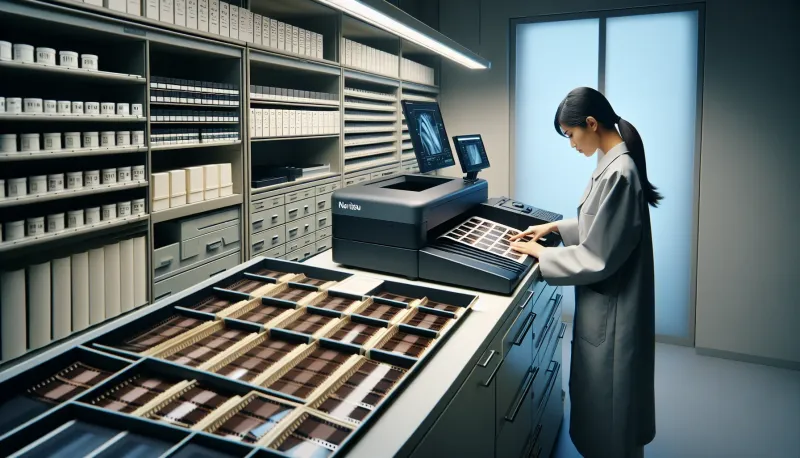
**Professional labs use commercial-grade equipment like Noritsu HS-1800 scanners (,000+), maintain precise chemical temperatures within 0.3°F, and employ trained technicians who understand film density and color correction.** The result is consistent color, proper exposure compensation, and negatives handled with archival care. In our experience processing over 50,000 rolls since 1994, we've seen drugstore processing produce usable results only about 60% of the time, versus 98%+ from professional labs. The difference in cost protects hundreds of dollars worth of film and irreplaceable memories.
- Commercial Noritsu/Fuji scanners capture 20+ megapixels with true optical resolution vs 2-4 megapixels from drugstore processing
- Chemistry maintained at exactly 100°F (±0.3°F) with daily monitoring versus uncontrolled batch processing
- Human color correction by trained technicians who understand each film stock's characteristics
- Proper negative handling with cotton gloves, dust removal, and archival Print File sleeving
- Turnaround of 4-6 days versus 1-3 weeks for drugstore shipping logistics
- Push/pull processing available versus fixed one-size-fits-all drugstore processing
- Your film never leaves the building—no shipping damage or lost roll risks
When you drop off a roll of film at a drugstore, you're not really getting it developed there. That film goes into a bag, gets shipped to a centralized processing facility in another state, runs through a high-volume automated machine, and comes back days or weeks later. Nobody looks at your images. Nobody adjusts for the specific characteristics of the film stock you shot. Nobody ensures your negatives are handled properly.
The reality is that drugstore processing produces usable results only about 60% of the time, based on the hundreds of "rescue" rescans we do each year from disappointed photographers. Professional film labs operate on an entirely different model. Your film stays in house. Trained technicians process and scan each roll with attention to the specific requirements of the emulsion, the shooting conditions, and your creative intent. The equipment costs tens of thousands of dollars and gets maintained on rigorous schedules. The chemistry stays fresh and temperature-controlled.
The difference shows up in your images. But unless you understand what actually happens during film processing and scanning, the value of professional lab work might not be obvious. This guide breaks down exactly what separates professional labs from drugstores and home processing, so you can make an informed choice about where your film goes.
What Actually Happens at a Drugstore
Most people assume that when they hand film to a CVS or Walgreens employee, someone in the back develops it. That hasn't been true for decades. Drugstores stopped maintaining on-site photo labs in the early 2000s as digital photography took over. Today, film dropped at a drugstore enters a logistics chain that looks something like this:
Your film sits in a collection bin until pickup day, which might be once or twice a week depending on volume. A courier collects film from multiple locations and transports it to a regional processing hub. These hubs handle enormous volumes—sometimes thousands of rolls per day from hundreds of retail locations.
At the processing center, your roll goes through a fully automated workflow. The film gets spliced together with other rolls onto a long strip and fed through a continuous processing machine. This machine runs the same chemistry and timing regardless of whether it's processing professional Portra 400 or decade-old drugstore film found in a drawer. The machine can't distinguish between a roll that needs careful handling and one that's already compromised.
After processing, the film strip runs through an automated scanner that captures frames without any human review. The scanner uses preset algorithms to guess at color balance and exposure. It can't tell if your images are supposed to be warm or cool, if the sunset should be orange or if that was a white balance issue. It just applies default corrections and moves on.
The prints or digital files ship back to the drugstore location where you originally dropped off. Total turnaround might be one to three weeks depending on the logistics schedule. Your negatives, if you get them back at all, arrive cut and stuffed into a paper envelope with no organization or protection.
The Real Cost of Drugstore Processing
Drugstore processing prices look attractive at first glance. Ten dollars to develop a roll seems reasonable compared to twenty-five or thirty at a professional lab. But consider what you're actually getting:
Scan Resolution (Drugstore Processing: 1500x1000 pixels (1.5MP)) — Professional Lab: 4000x6000 pixels (24MP)
Color Correction (Drugstore Processing: Automated presets) — Professional Lab: Human technician review
Chemistry Control (Drugstore Processing: Batch processing, variable) — Professional Lab: Daily monitoring, ±0.3°F
Negative Handling (Drugstore Processing: Paper envelope, often scratched) — Professional Lab: Archival sleeves, cotton gloves
Turnaround (Drugstore Processing: 1-3 weeks) — Professional Lab: 4-6 business days
Lost Roll Risk (Drugstore Processing: Shipping possible) — Professional Lab: Never leaves building Those low-resolution scans are typically 1500x1000 pixels or less. That's barely enough for a 4x6 print and completely inadequate for any serious use. If you want higher resolution, the automated scanner at the processing center may offer an upgrade option, but it's still running preset corrections with no human oversight.
More importantly, the automated processing makes no accommodation for the specific film stock. Kodak Portra has different color science than Fuji Pro 400H had, which differs from CineStill 800T. A skilled technician knows these differences and adjusts scanner settings accordingly. An automated system treats everything the same.
The chemistry situation creates another quality problem. High-volume processing centers optimize for throughput, not quality. Chemistry gets pushed longer than ideal because replacing it costs money. Temperature variations occur because maintaining precision across machines running 24 hours a day requires constant monitoring that cuts into margins.
Your negatives, if they survive the process without scratches or handling damage, come back in paper sleeves that offer no archival protection. Static electricity from the cheap plastic pages used at some facilities can actually attract dust that becomes permanently embedded in the emulsion.
Mail-In Your Film From Anywhere
Ship your film to our Brooklyn lab and get professional scans delivered to your inbox. Free shipping on 4+ rolls.
Professional Lab Processing: A Different World
Walk into a professional film lab and you immediately notice the difference. Temperature-controlled rooms maintain precise conditions for both chemistry and film storage. Commercial processors sit ready with fresh chemistry mixed to exact specifications. Scanners that cost more than most cars (,000-40,000) occupy dedicated workstations with calibrated monitors.
The workflow at a professional lab treats each roll as an individual project. When your film arrives at Kubus Photo Service, a technician logs it into our system with notes about the film stock, your processing preferences, and any special instructions. That information follows your roll through every step.
Chemistry Precision
C-41 color negative processing requires chemistry maintained within tight tolerances. The developer temperature needs to stay at 100°F plus or minus 0.3°F. Drift outside that range and you start seeing color shifts and density problems.
Professional labs use thermostatic control systems that continuously monitor and adjust bath temperatures. Fresh chemistry gets mixed according to manufacturer specifications using precise measurements. Replenishment rates follow schedules based on film surface area processed, not just time elapsed.
At Kubus Photo Service, we run Kodak chemistry at proper concentrations with daily monitoring of pH, specific gravity, and temperature. When chemistry ages beyond optimal performance, we replace it rather than trying to squeeze out extra runs. The cost of fresh chemistry ( per batch) is negligible compared to the value of your images.
Black and white processing offers even more control at a professional lab. Different films respond to different developers:
- Kodak Tri-X in D-76: classic look, moderate grain
- Ilford HP5 in Rodinal: high acutance, pronounced grain
- Any film pushed 2 stops: extended development time required
Professional labs can accommodate developer preferences and adjust times for push or pull processing. Can you get push processing at a drugstore? The question answers itself.
Scanner Quality
The scanner makes as much difference as the processing. Consumer flatbed scanners and the automated units in drugstore processing centers capture film at low resolution with minimal dynamic range. The plastic holders introduce film curl that degrades sharpness. Built-in dust removal, if available, often introduces artifacts.
Professional labs use dedicated film scanners designed specifically for the task. The Noritsu HS-1800, a workhorse in many professional labs including ours, uses a true optical system with custom lenses optimized for film scanning. It captures 35mm frames at over 20 megapixels of true optical resolution—not interpolated pixels.
More importantly, the Noritsu hardware captures a full 16-bit color depth with proper analog-to-digital conversion. This means the shadows and highlights in your scans contain real detail, not clipped data or posterized gradients. When you adjust exposure or color in post-processing, that extended data depth gives you room to work.
The infrared dust removal on professional scanners actually works. Digital ICE and similar technologies use an infrared channel to map dust and scratches, then intelligently remove them without affecting image detail. Consumer scanners either lack this feature or implement it poorly.
Human Color Correction
This might be the single biggest advantage of professional lab processing. A trained technician looks at your images and makes informed decisions about color balance and density.
Film stocks have specific color characteristics:
- Portra 400: warm, excellent skin tones, neutral shadows
- CineStill 800T: tungsten balance, needs different handling than daylight film
- Ektar 100: punchy saturation, slightly red skin tones
- Expired film: unpredictable shifts requiring individual evaluation
At a professional lab, the technician scanning your roll knows these characteristics. They recognize when a color shift is intentional versus accidental. They can see that your intentionally underexposed night shots need different treatment than a sunny day at the beach.
The color correction software used in professional labs offers precise control that automated systems can't match. Adjustments to individual color channels, selective density corrections, and fine-tuned white balance all happen in a color-managed workflow that maintains accuracy from scan to output.
Over the years, we've developed an eye for what each film stock should look like. That experience doesn't exist in an automated system.
What About Home Processing?
Home developing has experienced a renaissance as film photography grows. Developing your own film offers deep satisfaction and complete control over the process. But matching professional lab quality requires significant investment and expertise.
The Startup Investment
A basic home developing setup for black and white runs about to . You need:
- Developing tank and reels:
- Thermometer and timer:
- Graduated cylinders:
- Chemistry (developer, stop, fixer):
- Changing bag or dark space:
This gets you in the door for black and white processing.
Color C-41 processing at home adds complexity. The temperature control requirement of 100°F plus or minus 0.3°F challenges home setups. Sous vide circulators have become a popular solution (), but you also need proper containers, consistent timing, and fresh chemistry. Budget another to for a reliable C-41 setup.
Scanning represents the real financial hurdle:
- Plustek 8200i (35mm dedicated):
- Pakon F135 (used, when available):
- Epson V600 (flatbed, medium format):
- Epson V850 (better optics): ,000
- Noritsu/Frontier (professional): ,000-40,000 used
Professional-grade scanners like the Noritsu or Fuji Frontier units start at ,000 used and require specialized knowledge to operate and maintain. This is why professional labs exist. The equipment investment only makes sense when spread across thousands of rolls.
The Learning Curve
Beyond equipment, home processing demands expertise. Loading film onto reels in total darkness sounds simple until you actually try it with sweaty hands and a roll of Portra 800. Developing times vary by temperature, film stock, and your target aesthetic. Agitation technique affects grain and contrast.
Color processing adds temperature control challenges. Drifting even a degree outside the target range during the critical first developer affects color and density. Consistent results require practice and attention.
Scanning presents its own learning curve. Getting proper exposure, color balance, and sharpness from a home scanner takes time to master. Post-processing the raw scans in Lightroom or similar software adds another layer of required expertise.
A common mistake we see is photographers assuming home scanning is easy. The scans we receive from people asking for "rescans" often show dust, color casts, and poor exposure that required significant work to correct.
When Home Processing Makes Sense
Despite the challenges, home processing suits certain photographers well:
Black and white enthusiasts: If you shoot primarily black and white and enjoy the craft of darkroom work, home developing connects you to your images in a meaningful way. The meditative quality of working with chemistry appeals to many photographers.
High-volume shooters: If you shoot 10 or more rolls per month, the per-roll cost of home chemistry plus your time might beat professional lab fees. At for chemistry for lab processing, the math can work out.
Experimental work: Push and pull processing, cross-processing, and alternative chemistry experiments work better when you control the process. Professional labs can accommodate special requests, but having your own setup offers more flexibility for weird experiments.
For most photographers shooting a few rolls per month, though, professional lab processing remains the practical choice. The quality advantage, combined with the time savings of not managing chemistry and scanning, justifies the cost.
Comparing Quality: Real Examples
Theoretical advantages mean little without visible results. Here's what actually differs when comparing professional lab scans to drugstore processing.
Resolution and Detail
A professional scan at standard resolution captures 35mm frames at 4000x6000 pixels (24 megapixels). This provides enough detail for prints up to 16x24 inches and handles cropping well. Higher resolution scans push into the 6000x9000 pixel range, extracting maximum detail from the negative.
Drugstore processing centers typically scan at 1500x1000 or lower (1.5 megapixels). That's adequate for social media posts at small sizes but falls apart for prints or any significant cropping. Enlarging these scans reveals mushy detail and jpeg compression artifacts.
Color Accuracy
Professional labs work in calibrated color spaces with monitors that accurately display what the scanner captures. The technician making color decisions sees true colors, not whatever random calibration the monitor happens to have.
Automated drugstore processing has no color management to speak of. The preset algorithms were designed years ago for generic Kodak film and work poorly with modern professional stocks. Portra scans often come back too cold. CineStill looks completely wrong. Anything unusual gets butchered.
We've seen customers bring in drugstore scans of CineStill 800T that were color-corrected to look like daylight film—completely destroying the tungsten color balance that defines the stock.
Dynamic Range
Professional scanners capture 14 to 16 bits of tonal data, preserving detail in highlights and shadows. This matters enormously when your scene contained both bright skies and dark shadows. The extended range lets you recover detail in post-processing.
Consumer-grade scanning compresses everything to 8 bits with aggressive clipping. Bright areas blow out to pure white. Shadows crush to black. The data simply isn't there to recover in editing.
Handling and Preservation
Your negatives represent an irreplaceable original. Every scratch, fingerprint, or piece of embedded dust permanently degrades the image.
Professional labs handle film with cotton gloves using anti-static techniques. Negatives get sleeved in archival-quality materials designed for long-term preservation. At Kubus Photo Service, we return negatives in Print File archival sleeves that protect them for decades.
Drugstore processing centers handle film like any other commodity in a logistics chain. Workers focused on throughput don't have time for careful handling. Negatives come back with fingerprints, dust, and sometimes scratches from rough handling during cutting.
Making the Choice
Not every roll demands professional lab quality. Quick snapshots on a point-and-shoot might not justify the expense. But for images that matter—whether personal memories you want to preserve properly or professional work your reputation depends on—the choice becomes clear.
Professional labs cost more because they deliver more. Better equipment, better chemistry, better technique, and most importantly, human attention to your specific images. The difference shows up in every scan.
Is saving worth risking irreplaceable images? We recommend professional processing for:
- Important events (weddings, births, graduations)
- Travel photography from once-in-a-lifetime trips
- Professional or portfolio work
- Any film stock other than basic consumer film
- Pushed or pulled film requiring special development
- Medium format and large format film
At Kubus Photo Service, we've processed film in Brooklyn since 1994. Our Noritsu scanners, fresh Kodak chemistry, and experienced technicians deliver the quality that makes film photography worth shooting. Standard turnaround runs 4 to 6 business days depending on volume, with same-day and next-day rush service available when you need results fast.
Frequently Asked Questions
How much more does professional lab processing cost compared to drugstores?
Professional lab developing and scanning typically runs to for 35mm C-41, compared to to at drugstores. However, professional scans are dramatically higher quality (24MP vs 1.5MP), and you actually get your negatives back in proper archival sleeves. The cost per usable, high-quality image often favors professional labs when you factor in the scans you can't use from drugstore processing.
Can drugstores develop black and white film?
Most drugstores can't process true black and white film like Tri-X or HP5. They can only handle C-41 color process film. Some black and white films like Ilford XP2 use C-41 chemistry, but traditional silver-based black and white requires dedicated processing that drugstores don't offer.
How long does professional lab processing take?
Standard turnaround at most professional labs runs 4 to 6 business days, with variations depending on volume. Rush services offering same-day or next-day processing are usually available for an additional fee. Drugstore processing often takes one to three weeks because film ships to centralized processing facilities.
What should I look for when choosing a professional film lab?
Look for labs that specify their equipment, particularly scanner models like Noritsu or Fuji Frontier. Ask about their chemistry maintenance schedule. Read reviews focusing on consistency and color accuracy. A good lab should be able to answer technical questions about their process. For mail-in film developing, confirm they have proper packaging procedures to protect film in transit.
Is home developing worth it for casual photographers?
For casual photographers shooting a few rolls per month, professional lab processing usually makes more sense. The equipment investment (+), ongoing chemistry costs, and time spent scanning (15-30 minutes per roll) rarely pencil out for low-volume shooters. Home developing makes more sense for photographers shooting 10 or more rolls monthly, primarily black and white shooters, or those who value the craft aspects of darkroom work.
Do professional labs return negatives?
Reputable professional labs always return your negatives. At Kubus Photo Service, negatives come back in archival Print File sleeves that protect them for long-term storage. Some drugstore processing centers do return negatives, but often in cheap paper sleeves that offer no protection. Always confirm negative return policy before choosing a lab.
What's the difference between Noritsu and Frontier scanners?
Both are professional-grade film scanners, but they have different color characteristics. Noritsu scanners (like our HS-1800) tend toward slightly warmer tones. Frontier scanners produce slightly cooler, more neutral colors. Both capture true optical resolution at 20+ megapixels. The differences are subtle—most photographers won't notice unless comparing side by side.
Ready to Experience Professional Quality?
If you've been settling for drugstore processing or struggling with inconsistent home results, try a professional lab for your next roll. The difference becomes obvious as soon as you see your first scans.
Learn more about our film developing and scanning services, or start a mail-in order today. Questions about processing or scanning options? Call us at (718) 389-1339 or stop by the lab in Williamsburg, Brooklyn.
Kubus Photo Service has provided professional film developing in Brooklyn since 1994. Family-run and photographer-focused, we process everything from 35mm to large format with the care your images deserve.
Related Articles
Does CVS Develop Film? CVS vs Walgreens vs Professional Lab Compared
Drugstore film developing costs about the same as professional labs but delivers dramatically different results. This detailed comparison covers scan resolution, color accuracy, turnaround time, and negative return policies to help you choose where to send your film.
How Much Does Film Developing Cost in 2026? Complete Price Guide
Film developing costs $12-25 per roll in 2026. Get the complete breakdown of drugstore vs. professional lab pricing for 35mm, 120, disposable cameras, and black and white film with honest advice on where to spend and where to save.
Do You Get Your Negatives Back? What Every Film Photographer Must Know
Not every lab returns your negatives—and losing them means losing your originals forever. Learn which labs return negatives, why they matter more than your scans, proper archival storage, and how to protect your photographic legacy.
Ready to Develop Your Film?
We're a family-run film lab in Williamsburg, Brooklyn, developing film since 1994. Whether you drop off in store or mail your rolls from anywhere in the US, we treat every frame with care.
How to Mail In Film for Developing: Complete Step-by-Step Guide
Learn exactly how to safely mail your film for professional developing. Step-by-step guide covering packing, shipping options, what to expect, and how to get the best results from a professional film lab.
Read the Complete Guide