
Best Film Cameras for Beginners: An Honest 2026 Buying Guide
Quick Summary
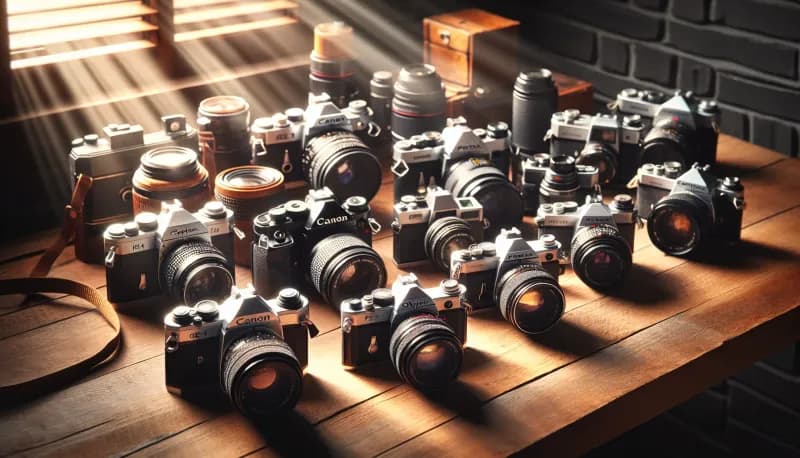
For learning photography properly, we recommend a manual SLR like the Pentax K1000 () or Canon AE-1 (). For casual point-and-shoot simplicity, look at the Olympus Stylus Epic or Nikon L35AF. In our experience, beginners who start with manual cameras learn faster and develop stronger fundamentals. Avoid overpaying for Instagram-hyped cameras and skip anything that needs repairs unless you've budgeted + for a technician.
- Pentax K1000 (): Fully mechanical, impossible to break, teaches exposure fundamentals through practice
- Canon AE-1 (): Adds aperture-priority auto exposure while keeping manual available, huge lens selection
- Olympus Stylus Epic (): Pocket-sized point-and-shoot with sharp f/2.8 lens, weatherproof
- Nikon L35AF (): Excellent optics at reasonable prices, great value alternative to hyped cameras
- Budget for your first few rolls of film and professional processing
- Avoid: Untested cameras, anything priced by hype rather than function, complex electronics without service history
For learning photography fundamentals, a manual 35mm SLR like the Pentax K1000 () or Canon AE-1 () will teach you more than any automatic camera. For casual shooting where you just want good photos without thinking about settings, the Olympus Stylus Epic or Nikon L35AF delivers excellent results from a pocket-sized body.
We've developed film from every camera ever made here at Kubus Photo Service. After thirty years watching beginners succeed and fail with different gear choices, we've developed strong opinions about what actually works. The reality is that camera choice matters less than most people think, but certain models genuinely make learning easier. This guide shares what we've learned.
The Two Paths: Learning vs. Just Shooting
Before recommending specific cameras, you need to decide what you want from film photography. Why are you picking up film in the first place?
Path One: Learn the Craft
If you want to understand how photography actually works, how light and aperture and shutter speed interact, how to make deliberate creative decisions, you need a camera with manual controls. That typically means a 35mm SLR with aperture and shutter speed dials you can set yourself.
The learning curve is steeper. Your first rolls will have more mistakes. But you'll develop skills that transfer to any camera, including digital. In our experience, photographers who start with manual controls become better photographers faster.
Path Two: Just Get Good Photos
If you want the film aesthetic without the technical learning, a quality point-and-shoot handles everything automatically. You compose and press the button. The camera sets focus, aperture, and shutter speed. Your job is showing up with loaded film.
You won't learn as much about photography mechanics, but you'll capture memories with minimal friction.
Both paths are valid. Neither is better. Choose based on your actual goals, not what seems more "authentic."
Beginner Camera Comparison Table
Here's a quick comparison of the most popular beginner film cameras:
Pentax K1000 (Type: Manual SLR) — , Best For: Learning fundamentals, Pros: Fully mechanical, simple, durable, Cons: No auto modes
Canon AE-1 (Type: SLR) — , Best For: Balanced learning, Pros: Aperture-priority + manual, huge lens selection, Cons: Needs batteries, "squeal" issue
Canon AE-1 Program (Type: SLR) — , Best For: Gradual learning, Pros: Full auto + manual modes, Cons: Higher price, electronic
Nikon FM2 (Type: Manual SLR) — , Best For: Serious beginners, Pros: Pro build, 1/4000 shutter, Cons: More expensive
Olympus Stylus Epic Type: Point-and-shoot — , Best For: Casual shooting, Pros: Pocket-sized, weatherproof, f/2.8, Cons: Overhyped pricing
Nikon L35AF Type: Point-and-shoot — , Best For: Value seekers, Pros: Sharp f/2.8 lens, affordable, Cons: No flash disable
Yashica Mat 124G Type: TLR (Medium Format) — , Best For: Medium format entry, Pros: Square format, built-in meter, Cons: 12 shots per roll
35mm SLRs: The Learning Cameras
SLR stands for Single Lens Reflex. A mirror inside the camera reflects light from the lens up to a prism in the viewfinder. You see through the actual taking lens, so what you see is exactly what you get in your photo.
When you press the shutter, the mirror flips up, the shutter opens, light hits film, the shutter closes, the mirror drops back down. This creates the characteristic SLR "clunk" sound.
Pentax K1000
The K1000 might be the greatest learning camera ever made. Pentax manufactured it from 1976 to 1997, creating an enormous supply of surviving bodies. Photography schools worldwide used it to teach generations of students.
Why it works for beginners:
The K1000 has exactly three controls that affect exposure: the shutter speed dial, the aperture ring on the lens, and the focus ring. No program modes, no auto exposure, no distractions. You set everything yourself.
A simple match-needle meter inside the viewfinder tells you if exposure is correct. Turn the aperture ring or shutter dial until the needle centers. Done.
The mechanical shutter works without batteries. If the battery dies, you lose the meter but can still shoot using the Sunny 16 rule or an external meter. The camera itself never stops working.
Build quality is legendary. These cameras have survived decades of student abuse. Drop one from table height and it probably still works.
What to look for when buying:
- Meter responds to changes in light (test by pointing at bright vs. dark areas)
- Shutter fires at all speeds with distinct sound differences
- Lens free of fungus (looks like spiderwebs) and haze (fog throughout)
- Film advance lever operates smoothly
- Viewfinder is clean and bright
The standard 50mm f/2 lens that comes with most K1000s is excellent. You don't need anything else to start.
Limitations:
No aperture-priority or shutter-priority modes. No motor drive. No exposure compensation dial. These limitations are features for learning, but some photographers find them frustrating.
Canon AE-1
The AE-1 revolutionized the camera market when Canon introduced it in 1976. It brought aperture-priority automatic exposure to affordable cameras for the first time.
Why it works for beginners:
You can learn in stages. Start with aperture-priority mode: you set the aperture, the camera selects the shutter speed. This teaches you about aperture's effect on depth of field while the camera ensures correct exposure.
When you're ready, switch to manual mode for full control. The meter still works; you just override its shutter speed selection.
Canon's FD lens mount includes hundreds of options at reasonable prices. The 50mm f/1.8 that comes with most AE-1s is sharp and fast. Zooms, wide angles, and telephotos are all readily available.
What to look for:
The AE-1 has a known issue called "Canon squeal," a high-pitched squeak when firing the shutter. It's caused by dried lubricant on the mirror dampener and indicates the camera needs service. Budget for a CLA (clean, lubricate, adjust) if you hear this.
Confirm the auto exposure works by aiming at different light sources and watching the viewfinder display change. Test manual mode too.
Limitations:
The AE-1 requires batteries to function. No battery means no shutter operation at all. This makes it less reliable than fully mechanical cameras for extended travel or situations where batteries might not be available.
Canon AE-1 Program
Released in 1981, the Program version added a full program mode where the camera selects both aperture and shutter speed. It also added shutter-priority.
Why it works for beginners:
More training wheels than the original AE-1. You can start in full auto and gradually take over more control as you learn. All the original AE-1 capabilities remain available.
Considerations:
Prices run higher than the basic AE-1 due to extra features. Whether those features justify the premium depends on your budget and learning style.
Nikon FM2
The FM2 represents a step up in build quality and features from the K1000 while maintaining fully mechanical operation.
Why it works for beginners:
All-mechanical shutter works without batteries. Maximum shutter speed of 1/4000 second and flash sync at 1/250 second exceed what most comparable cameras offer.
Nikon F-mount lenses span fifty years of production. Many modern Nikon AF lenses work on the FM2 for manual focus. This ecosystem provides endless upgrade options.
Professional build quality means the camera will last decades with basic maintenance.
What to look for:
Confirm meter accuracy with a known good meter or phone app. Test all shutter speeds. Check the viewfinder for dust or debris.
Considerations:
Prices are higher than K1000s and AE-1s, typically . The premium reflects superior specifications and construction, but beginners don't necessarily need these advantages.
Nikon FE2
The FE2 adds aperture-priority automatic exposure to the FM2's mechanical foundation. A mechanical shutter still provides M90 (1/90 second) backup if batteries die.
Why it works for beginners:
Best of both worlds: automation when you want it, manual when you want it, and mechanical backup if batteries fail.
Minolta X-700
Often overlooked in discussions dominated by Canon and Nikon, the X-700 offers excellent value. Over the years, we've seen this camera consistently outperform expectations.
Why it works for beginners:
Full program, aperture-priority, and manual modes. The metering system is accurate and consistent. Minolta MD mount lenses deliver excellent quality at 30-50% lower prices than equivalent Canon or Nikon glass.
What to look for:
The X-700 is fully electronic with no mechanical backup. Dead battery means dead camera. Test all functions before buying.
Olympus OM-1 and OM-2
Olympus designed the OM system for photographers who wanted SLR capability in a smaller package.
Why it works for beginners:
Noticeably more compact than Canon and Nikon SLRs, about 25% smaller and lighter. The OM-1 is fully mechanical with match-needle metering. The OM-2 adds automatic exposure.
Zuiko lenses are sharp and relatively affordable. The system rewards investment.
Considerations:
Smaller body means smaller controls. Some photographers with larger hands find OM cameras cramped. The focus ring rotation direction differs from most other brands, which creates confusion when switching systems.
Mail-In Your Film From Anywhere
Ship your film to our Brooklyn lab and get professional scans delivered to your inbox. Free shipping on 4+ rolls.
Point-and-Shoot Cameras
If the SLR approach seems like too much work, point-and-shoots deliver excellent results with minimal input. What's the appeal? You focus on composition while the camera handles everything else.
Olympus Stylus Epic (MJU-II)
The Stylus Epic became legendary for its combination of image quality, compact size, and weather sealing.
Why it works for beginners:
- 35mm f/2.8 lens is genuinely excellent, sharp across the frame
- Fits in a pants pocket, so you'll actually carry it
- Weatherproofing handles light rain and splashes
- Autofocus is quick and accurate in most conditions
- Simple operation: point and shoot
Considerations:
Prices have increased dramatically, often as the camera became Instagram-famous. You're now paying a significant premium for the specific Stylus Epic rather than for equivalent image quality. A common mistake we see is beginners overpaying for this camera when alternatives work just as well.
Nikon L35AF
Nikon's original point-and-shoot featured a 35mm f/2.8 lens with Nikon's optical quality. We recommend this to beginners who want point-and-shoot convenience without paying the hype tax.
Why it works for beginners:
- Excellent optics produce sharp, well-corrected images
- f/2.8 aperture handles lower light better than slower point-and-shoot lenses
- Prices remain reasonable () compared to the hyped Olympus models
- Solid build quality has kept many of these cameras functional for decades
Considerations:
Auto flash can fire when you don't want it. There's no flash disable option on the original model.
Yashica T4 (T4 Super/T5)
Carl Zeiss designed the 35mm f/3.5 T* Tessar lens in the T4, bringing high-end optical quality to the compact format.
Why it works for beginners:
The Zeiss lens produces beautiful images with smooth rendering. The camera operates quietly for a point-and-shoot. Weather resistance adds durability.
Considerations:
Prices have risen significantly, often as the T4 gained reputation. Current values may not represent the best use of a beginner's budget.
Contax T2
The premium point-and-shoot choice, featuring a 38mm f/2.8 Carl Zeiss Sonnar in a titanium body.
Why it works:
Exceptional image quality. The Sonnar lens produces beautiful rendering with characteristic bokeh. Aperture-priority mode offers unusual control for this camera class.
Considerations:
Prices are very high, often . This is a collector camera that also takes great photos, but the premium doesn't make sense for beginners unless money is no object.
Budget Point-and-Shoot Options
Not every point-and-shoot needs to cost hundreds of dollars. Many inexpensive cameras from the 1990s and 2000s produce perfectly good images. What actually happens when you shoot a camera versus a one? Often the results are surprisingly close.
Look for:
- Fixed focal length lens (zooms in this era often compromise quality)
- Maximum aperture of f/3.5 or faster
- Flash disable option
- Known brand (Canon, Nikon, Olympus, Fuji, Pentax)
The difference between a point-and-shoot and a one is often less than you'd expect when you compare actual photographs.
Medium Format for Beginners
Medium format refers to 120 film, which produces negatives four times larger than 35mm. The larger negative captures more detail and shows finer grain at equivalent enlargements.
Twin Lens Reflex (TLR) Cameras
TLRs have two lenses stacked vertically. The top lens feeds a waist-level viewfinder. The bottom lens takes the picture.
Yashica Mat 124G
The affordable entry point into quality medium format, typically . The Yashinon lens is sharp. The built-in meter works well. Prices remain reasonable because these weren't made by Hasselblad or Rolleiflex.
You get 12 square (6x6) exposures per roll. The square format forces different compositions than rectangular 35mm.
Considerations:
Fewer exposures per roll means higher per-image costs, per shot with processing. The waist-level viewing takes adjustment. Parallax error requires compensation at close distances.
Medium Format SLRs
Mamiya 645
The entry point to interchangeable lens medium format, typically for a body with lens. The 645 format (6cm x 4.5cm) provides 15-16 exposures per roll, keeping costs more manageable than larger formats.
Manual and automatic exposure bodies are available at various price points. Sekor lenses offer professional quality.
Considerations:
Significantly larger and heavier than 35mm cameras. Film and processing costs add up. This is generally not where beginners should start unless they have specific reasons for wanting larger negatives.
What to Avoid
Over the years, we've seen the same mistakes repeated. Here are the common pitfalls:
Untested Cameras from Online Marketplaces
That eBay camera listed "as-is, for parts" is almost certainly going to have problems. Budget for professional testing and service, or buy from sellers who test their equipment.
Instagram-Hyped Cameras at Premium Prices
The Contax T2 takes great photos, but not better photos than a Nikon L35AF. Hype inflates prices beyond reasonable value. Don't pay influencer premiums.
Complex Electronics Without Service History
Late-era electronic SLRs with motherboards, LCD displays, and complex circuitry often cannot be repaired when they fail. Simple mechanical cameras can be serviced indefinitely. Prefer repairable over fancy.
Cameras That "Just Need" Something
A camera that "just needs new light seals" or "just needs the battery tested" usually has other problems the seller hasn't discovered yet. Buy working cameras or buy from specialists who restore them properly.
Rare or Unusual Models
That obscure Soviet rangefinder might be interesting, but good luck finding service or parts. Stick to cameras with established repair support and available accessories.
Testing Before You Buy
Whether buying in person or from a reputable online seller, verify these functions:
Pre-Purchase Checklist
Shutter Function:
- Fire the shutter at every available speed
- Listen for distinct differences between 1/1000 and 1/30 second
- Slow speeds (1 second and longer) should be obviously slow
- If 1 second sounds like 1/4 second, the shutter needs calibration ( repair)
Meter Operation:
- Point the camera at a light source, then move to shadow
- The meter should respond with different readings
- No response means the meter is dead
Film Advance:
- With no film loaded, advance the lever and fire repeatedly
- The mechanism should feel smooth
- Grinding or excessive resistance indicates problems
Viewfinder Clarity:
- Look through the viewfinder at a distant object
- The view should be sharp when the lens is focused at infinity
- Haze, dust bunnies, or dark corners indicate issues
Lens Condition:
- Hold the lens up to a light and look through it
- Check for fungus (tiny spider webs), haze (fog throughout), and scratches
- Small dust specks are normal and don't affect image quality
Light Seals:
- Open the camera back and examine the foam strips
- Degraded seals look crumbly, sticky, or may be absent
- Replacing light seals DIY or professional
Body Integrity:
- Check the battery compartment for corrosion
- Look for dents, cracks, or damage that might affect film path
- Confirm the back closes securely
Budget Allocation
How much should a beginner spend? Here's a realistic breakdown:
** total:** Budget 35mm SLR with standard lens. Pentax K1000 or Minolta X-700 fit here.
** total:** Mid-range SLR or quality point-and-shoot. Canon AE-1 Program or Nikon L35AF territory.
** total:** Premium SLR with extra lens, or high-end point-and-shoot at non-crazy prices.
+ total: Nikon FM2/FE2 territory, or medium format entry.
Don't forget these additional costs:
- Light seal replacement: DIY or professional
- Batteries:
- First rolls of film and processing: for 3-4 rolls
- Camera strap if not included:
- Total additional costs:
Your First Roll
Once you have a camera, load it with ISO 400 color negative film. Kodak Gold 400 () or Fujifilm Superia 400 () cost little and forgive exposure errors.
Shoot a whole roll with intention. Include outdoor and indoor shots. Try different subjects. Note any issues you experience.
Have it developed at a professional lab rather than a drugstore. The difference in scan quality is dramatic. You'll actually be able to evaluate your exposures and the camera's performance.
Review your results critically. Are exposures consistent? Is focus accurate? Any mechanical problems evident? This test roll reveals whether your camera functions correctly before you use it for important subjects.
Growing Beyond Your First Camera
Eventually you'll know what you want that your first camera doesn't provide. Maybe you want a faster lens. Maybe you want a more compact body. Maybe you want to try medium format.
The camera you start with teaches you what to look for in your second camera. That education is valuable regardless of which specific model you choose initially.
Frequently Asked Questions
Should I buy a film camera or start with digital?
Both approaches work. Film costs per roll (film + processing) but forces deliberate shooting. Digital provides instant feedback at no per-image cost. Neither is objectively better for learning.
Are old cameras reliable?
Mechanical cameras from the 1970s and 1980s can last indefinitely with periodic service ( for a CLA). Electronic cameras from the same era have more failure points. All used cameras benefit from professional inspection.
How much should I pay for a Canon AE-1?
Prices fluctuate with market conditions. Generally for a working body, with a 50mm lens. Pay less for untested cameras, more for professionally serviced ones.
Do I need multiple lenses to start?
No. The 50mm lens that comes with most SLRs handles a huge range of subjects. Master one lens before buying more. We've seen beginners waste hundreds on lenses they don't need yet.
What's the best camera for street photography?
Quiet, compact cameras work best. Point-and-shoots like the Olympus Stylus Epic excel. Among SLRs, smaller bodies like the Olympus OM series draw less attention.
Can I shoot film cameras professionally?
Yes, many working photographers use film. Just understand that turnaround takes longer and costs more than digital. Build that into your workflow and pricing.
What if my camera stops working mid-roll?
Finish rewinding if possible, then have the roll processed. Most mechanical problems still allow film to be removed. A good lab like Kubus Photo Service can handle partial rolls and other complications, so don't panic.
Kubus Photo Service develops film from every camera type. Our Noritsu equipment handles everything from half-frame to medium format, from perfectly exposed to drastically rescued. Bring your test rolls to our Williamsburg, Brooklyn location or use our mail-in film lab. Learn more about our film developing and scanning services or call (718) 389-1339.
Related Articles
Best Film for Beginners: The Honest Guide from 30 Years Behind the Counter
After developing film for beginners since 1994, we've seen every mistake and every triumph. Here's our no-nonsense guide to choosing your first film stocks, avoiding expensive pitfalls, and building a foundation that actually works.
How to Test a Used Film Camera Before Buying: The Complete Inspection Guide
A thorough pre-purchase inspection can save you hundreds on repairs. Learn the exact tests professional camera technicians use to evaluate shutters, meters, lenses, and light seals before you hand over your money.
How Much Does Film Developing Cost in 2026? Complete Price Guide
Film developing costs $12-25 per roll in 2026. Get the complete breakdown of drugstore vs. professional lab pricing for 35mm, 120, disposable cameras, and black and white film with honest advice on where to spend and where to save.
Ready to Develop Your Film?
We're a family-run film lab in Williamsburg, Brooklyn, developing film since 1994. Whether you drop off in store or mail your rolls from anywhere in the US, we treat every frame with care.
How to Mail In Film for Developing: Complete Step-by-Step Guide
Learn exactly how to safely mail your film for professional developing. Step-by-step guide covering packing, shipping options, what to expect, and how to get the best results from a professional film lab.
Read the Complete Guide